Cart
0
You may also like
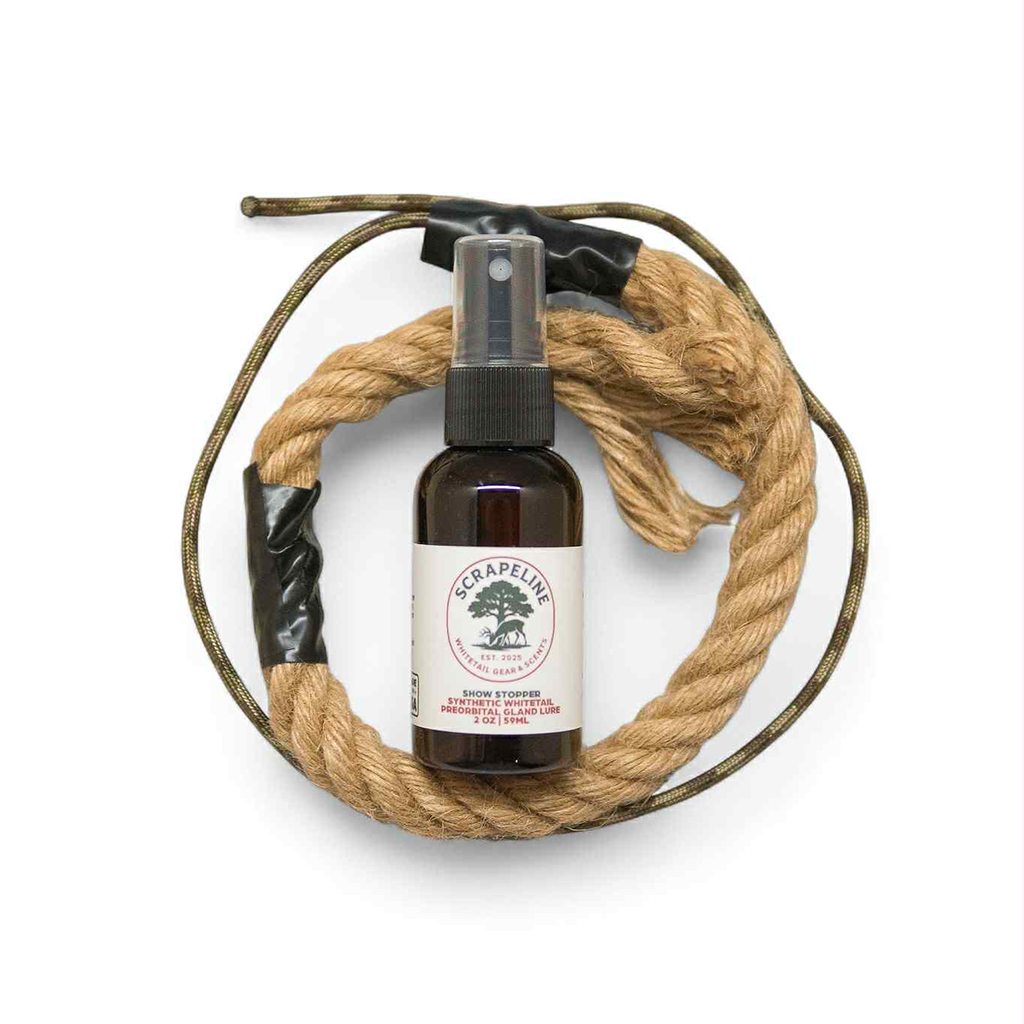


Thanks for choosing Scrapeline!
Whether this is your first mock scrape or you've been running them for years, this guide will walk you through the setup process and share a few tips we've learned along the way. In just a few minutes, you'll have a mock scrape that's ready to start collecting information—and with a little patience, become a hotspot for deer activity.
Let's get started.


What’s in the Kit
Select an active deer travel corridor, field edge, trail intersection, or another area where deer naturally travel.
Pro Tip: We recommend wearing gloves while handling your mock scrape rope and creating the scrape to help minimize human scent.
Use the included paracord to hang the rope from an overhanging branch approximately 4–5 feet above the ground. Allow the rope to hang freely.
Unravel the rope beneath the knot. The loose fibers help absorb and retain scent.
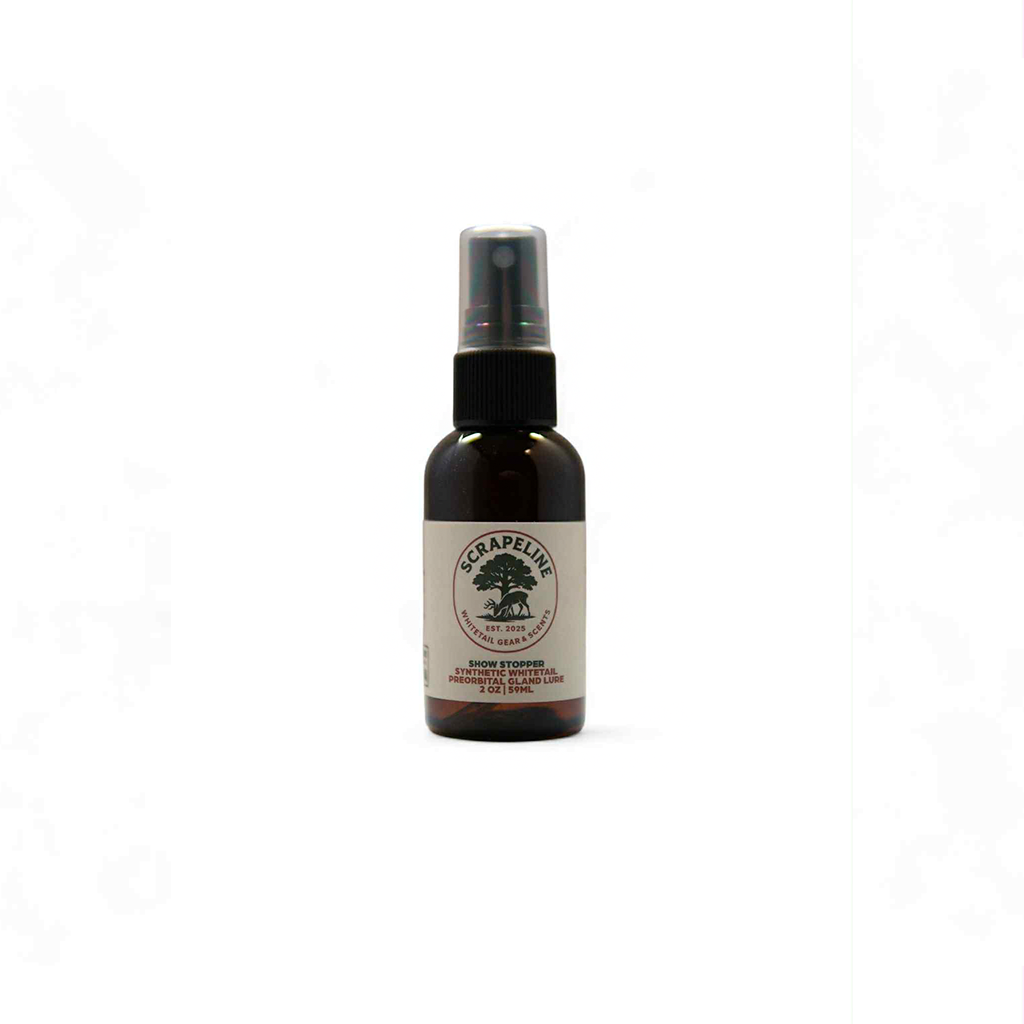
Thoroughly spray the unraveled portion of the rope with Show Stopper pre-orbital lure.
Clear away leaves and debris beneath the rope until bare soil is exposed, creating a scrape approximately 2–3 feet in diameter.
Once your mock scrape is complete, leave the area and avoid unnecessary visits. The less pressure you put on the area, the better.
We highly recommend placing a trail camera overlooking every mock scrape. Mock scrapes are one of the most effective ways to inventory the deer using your property and can also create excellent hunting opportunities. While many hunters associate scrapes with the rut, deer use them as a form of communication throughout much of the year, making them valuable for summer scouting, monitoring seasonal movement, and hunting during the fall.
